Auspurg, Katrin. 2025.
“Robustness Is Better Assessed with a Few Thoughtful Models Than with Billions of Regressions.” Proceedings of the National Academy of Sciences 122 (43): e2521917122.
https://doi.org/10.1073/pnas.2521917122.
Brodeur, Abel, Derek Mikola, Nikolai Cook, et al. 2026.
“Reproducibility and Robustness of Economics and Political Science Research.” Nature 652 (8108): 151–56.
https://doi.org/10.1038/s41586-026-10251-x.
Castanelli, Damian. 2024.
“Developing Your Philosophical Stance as a PhD Student: A Case Study.” Focus on Health Professional Education: A Multi-Professional Journal 25 (2): 130–43.
https://doi.org/10.11157/fohpe.v25i2.831.
Crüwell, Sophia, Johnny van Doorn, Alexander Etz, et al. 2019.
“Seven Easy Steps to Open Science: An Annotated Reading List.” Zeitschrift Für Psychologie 227 (4): 237248.
https://doi.org/10.1027/2151-2604/a000387.
Darwin Holmes, Andrew Gary. 2020.
“Researcher Positionality: A Consideration of Its Influence and Place in Qualitative Research. A New Researcher Guide.” Shanlax International Journal of Education 8 (4): 110.
https://doi.org/10.34293/education.v8i4.3232.
Devezer, Berna, Luis G Nardin, Bert Baumgaertner, and Erkan Ozge Buzbas. 2019.
“Scientific Discovery in a Model-Centric Framework: Reproducibility, Innovation, and Epistemic Diversity.” PloS One 14 (5): e0216125.
https://doi.org/10.1371/journal.pone.0216125.
DuBois, James M. 2024.
Sharing Qualitative Research Data: Survey of Qualitative Researchers, United States, 2019: Version 1.
ICPSR - Interuniversity Consortium for Political and Social Research.
https://doi.org/10.3886/ICPSR38957.V1.
Goundar, Prashneel Ravisan. 2025.
“Researcher Positionality: Ways to Include It in a Qualitative Research Design.” International Journal of Qualitative Methods 24 (March): 16094069251321251.
https://doi.org/10.1177/16094069251321251.
Heaton, Janet. 2008.
“Secondary Analysis of Qualitative Data: An Overview.” Historical Social Research 33 (3).
https://www.jstor.org/stable/20762299.
Jafar, Anisa J. N. 2018.
“What Is Positionality and Should It Be Expressed in Quantitative Studies?” Emergency Medicine Journal, ahead of print.
https://doi.org/10.1136/emermed-2017-207158.
Kathawalla, Ummul-Kiram, Priya Silverstein, and Moin Syed. 2021.
“Easing into Open Science: A Guide for Graduate Students and Their Advisors.” Collabra: Psychology 7 (1): 18684.
https://doi.org/10.1525/collabra.18684.
Lamb, Danielle, Amy Russell, Nicola Morant, and Fiona Stevenson. 2024.
“The Challenges of Open Data Sharing for Qualitative Researchers.” Journal of Health Psychology 29 (7): 659–64.
https://doi.org/10.1177/13591053241237620.
Lazard, Lisa, and Jean McAvoy. 2020.
“Doing Reflexivity in Psychological Research: What’s the Point? What’s the Practice?” Qualitative Research in Psychology 17 (2): 159–77.
https://doi.org/10.1080/14780887.2017.1400144.
Liljedahl, Matilda, Per J. Palmgren, and Cormac McGrath. 2025.
“Twelve Tips on Finding a Research Orientation: A Practical Guide for the Novice Researcher.” Medical Teacher 47 (8): 1269–73.
https://doi.org/10.1080/0142159X.2025.2473607.
Meehl, Paul E. 1990.
“Why Summaries of Research on Psychological Theories Are Often Uninterpretable.” Psychological Reports 66 (1): 195–244.
https://doi.org/10.2466/pr0.1990.66.1.195.
Miske, Olivia, Anna Lou Abatayo, Mason Daley, et al. 2026.
“Investigating the Reproducibility of the Social and Behavioural Sciences.” Nature 652 (8108): 126–34.
https://doi.org/10.1038/s41586-026-10203-5.
Morin, Edgar, and Anne Brigitte Kern. 1999. Homeland earth: a manifesto for the new millenium. Advances in systems theory, complexity, and the human sciences. Hampton Press.
Munafò, Marcus R., Brian A. Nosek, Dorothy V. M. Bishop, et al. 2017.
“A Manifesto for Reproducible Science.” Nature Human Behaviour 1 (1): 21.
https://doi.org/10.1038/s41562-016-0021.
Okasha, Samir. 2016.
Philosophy of Science: Very Short Introduction. Oxford: Oxford University Press.
https://doi.org/10.1093/actrade/9780192802835.001.0001.
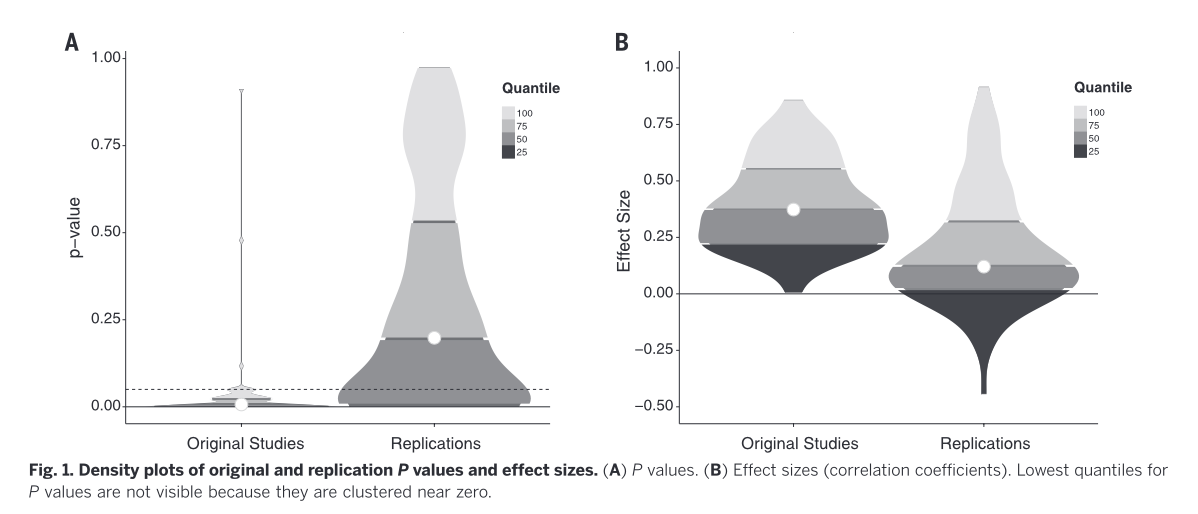
Open Science Collaboration. 2015.
“Estimating the Reproducibility of Psychological Science.” Science 349 (6251): aac4716.
https://doi.org/10.1126/science.aac4716.
Pashler, Harold, and Eric-Jan Wagenmakers. 2012.
“Editors’ Introduction to the Special Section on Replicability in Psychological Science: A Crisis of Confidence?” Perspectives on Psychological Science 7 (6): 528530.
https://doi.org/10.1177/1745691612465253.
Rosenberg, Alexander, and Lee Mclntyre. 2020. Philosophy of science: a contemporary introduction. Fourth edition. Routledge contemporary introductions to philosophy. Routledge.
Scheel, Anne M. 2022.
“Why Most Psychological Research Findings Are Not Even Wrong.” Infant and Child Development 31 (1): e2295.
https://doi.org/10.1002/icd.2295.
Tomlinson, Yalda Natasha. 2023.
The Importance of Engaging with Ontology and Epistemology as an ECR.
https://www.bps.org.uk/psychologist/importance-engaging-ontology-and-epistemology-ecr.
Tooze, Adam. 2023.
“Welcome to the World of the Polycrisis.” Financial Times 28 (10).
https://www.ft.com/content/498398e7-11b1-494b-9cd3-6d669dc3de33.
Yarkoni, Tal. 2022.
“The Generalizability Crisis.” Behavioral and Brain Sciences 45.
https://doi.org/10.1017/s0140525x20001685.